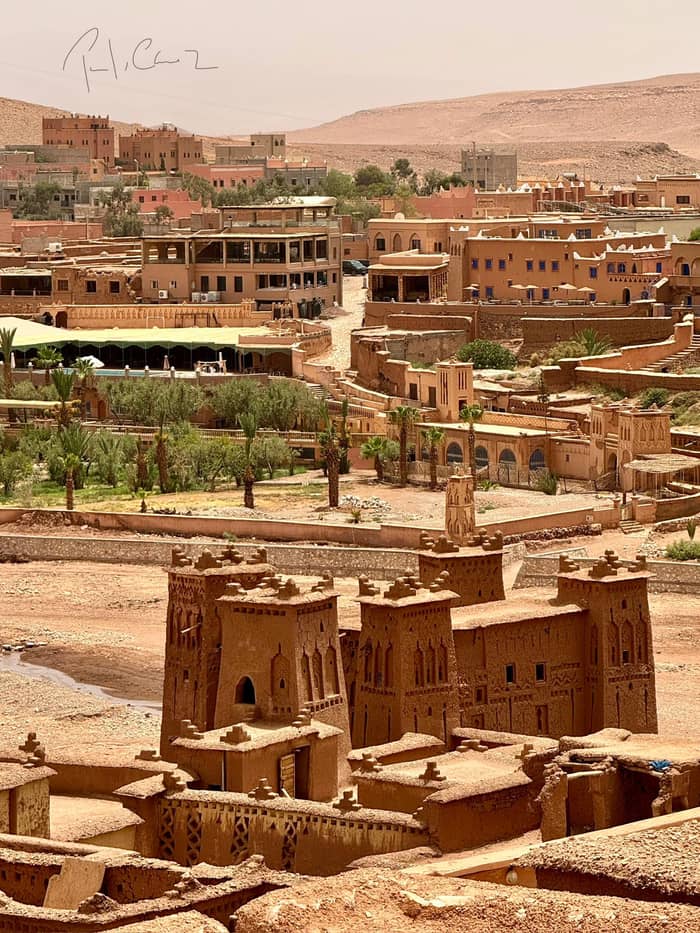
Gentle days
Spring window
March to May
See the day tripInteractive tick list
Ouarzazate and Ait Benhaddou day trip from Marrakech
★ 4.7 · 10,725 ratings
Checklist: 9 items
Tick items as you finish them. We save your progress on this device.
0 / 9 ready
That is everything. Only your date and your pickup point are left to choose.
Book a seatSpring and autumn are the seasons the tourism office names. Here is what the Ouarzazate record adds for every month, what snow can do to the pass and what to pack for each season.
Editorial team, ouarzazatedaytrip.click · Updated November 23, 2026 · Read in 9 min
Summary view
For an Ait Ben Haddou day tour and the wider Ouarzazate region, the national tourism body points to spring, from March to May, and to autumn, from September to November, and its general climate page agrees about the south of the country, where spring and fall suit a trip toward the Sahara.1,3 That advice fits a day trip from Marrakech well. The route climbs a mountain pass in the morning, spends the middle of the day on open ground around the ksar and the studios, and returns over the same pass in the afternoon, and a day that is neither scorching nor icy makes every leg easier.
None of this rules out the other months. The same office describes summer in the region as very hot and winter days as mild with cool evenings, which is an honest description rather than a warning.1 A traveller with a fixed week in July can still see the ksar, and a traveller with a fixed week in January can still cross the pass; the difference lies in the clothes, the start time and how much of the afternoon you spend walking in the open.
Use the rest of this page as a month-by-month map. The Ouarzazate station record fills in the numbers behind the office's seasons, the tour listings fill in what the operators say about weather, and the checklist further down turns it all into things to pack. If you are still choosing dates, the booking at the end of the page is free to cancel until 24 hours before the day, which leaves room to move when a forecast changes.
Month by month
| Month | Daily high and low | Rain | What it means for the day |
|---|---|---|---|
| January | 16.9 °C and 1.7 °C2 | 5 mm2 | Cold dawn, mild afternoon1 |
| March | 22.6 °C and 7.7 °C2 | 13 mm2 | Spring window opens1 |
| May | 30.4 °C and 15.2 °C2 | 2 mm2 | Dry, with the heat building1 |
| July | 38.7 °C and 22.7 °C2 | 4 mm2 | Very hot at midday1 |
| September | 32.8 °C and 18 °C2 | 14 mm2 | Autumn window opens1 |
| October | 26.9 °C and 12.7 °C2 | 18 mm2 | Comfortable walking1 |
| November | 21.4 °C and 7.4 °C2 | 5 mm2 | Cool, short days1 |
| December | 17.5 °C and 3.6 °C2 | 23 mm2 | Cold nights, snow risk on the pass |
All figures come from the NOAA record of the Ouarzazate station, in the valley and not on the pass, so they describe the town side of the day.2
Spring is the season where the numbers and the tourism office agree most neatly. The Ouarzazate record gives a daily high of 22.6 °C in March, 27 °C in April and 30.4 °C in May, with lows of 7.7 °C, 11 °C and 15.2 °C.2,2,2 Those are comfortable walking temperatures for a ksar built on a hillside, and the morning chill that lingers in March is gone by the time the van reaches the pass.
Spring is also dry. March records 13 mm of rain and April 11 mm, with May at only 2 mm and no wet days at all in the record.2,2,2 The days lengthen too, from 11.9 hours of daylight in March to 13.7 hours in May, which gives a long day trip room at both ends.2,2 An 11 hour tour fits inside that light with the return leg driven in daylight.
The caution for spring is the end of the window. By late May the record shows a daily high of 30.4 °C, and the ksar's open lanes have little shade, so a May booking behaves more like early summer than like early spring.2 If you can choose, March and April are the gentler months on the record, and a hat and a water bottle still belong in the bag. An Ait Ben Haddou one day trip in spring is the easy case, with the long drive in comfortable light.
Month by month
Sunless hours around mid-month and the count of days with 2.5 mm or more of precipitation. NOAA, station Ouarzazate, the station 25.5 km from Ait Benhaddou at 1,139 m, 1971 to 2020 + 1991 - 2020.2
Summer is where the record turns severe. June reaches a daily high of 35.1 °C, July 38.7 °C and August 37.4 °C, and the nights stay warm at 19.7 °C, 22.7 °C and 22.1 °C.2,2,2 The tourism office's own wording, that summer is very hot, is a fair summary of those figures.1 A tour that lets you walk the ksar in the middle of the day is asking you to do that in the heat of the July figure above.2
The pattern of the day matters more in July than any other month. Sun above the horizon lasts 14 hours at mid-month, so evenings are long and the return drive is safe from darkness, but the heat peaks while most day-trip groups are at the ksar or at lunch.2 Move your walking to the start of the stop, drink steadily, carry a hat and sunglasses, and take the shade of the ksar's narrow lanes where you find it.
UNESCO describes the earthen buildings of Ait-Ben-Haddou as perfectly adapted to the climatic conditions, which is worth remembering when the sun is high: the thick clay walls that make the place photogenic also keep their interiors cooler than the open street.4 That is a fact about the construction rather than a promise about any particular room; take it as a cue to look inside doorways that are open, not as a guarantee of relief.
Pick your month
Name your top concern and the months to try first line up.
If I dislike heat and want to walk the ksar
March, April or November
Highs of 22.6 °C, 27 °C and 21.4 °C are the lowest of the walking months.2,2,2
If I want the longest day for the long drive
May to August
Daylight runs from 13.3 to 14.1 hours in the summer months.2,2,2,2
If I can only travel in July or August
Start early, shade at noon
If I can only travel in winter
Book free cancellation
Snow closures can lead to a reschedule or a refund.
If I want the official recommendation
Spring or autumn
Tourism officials list spring from March to May and autumn from September to November.1
Season cards
Gentle days
March to May
See the day trip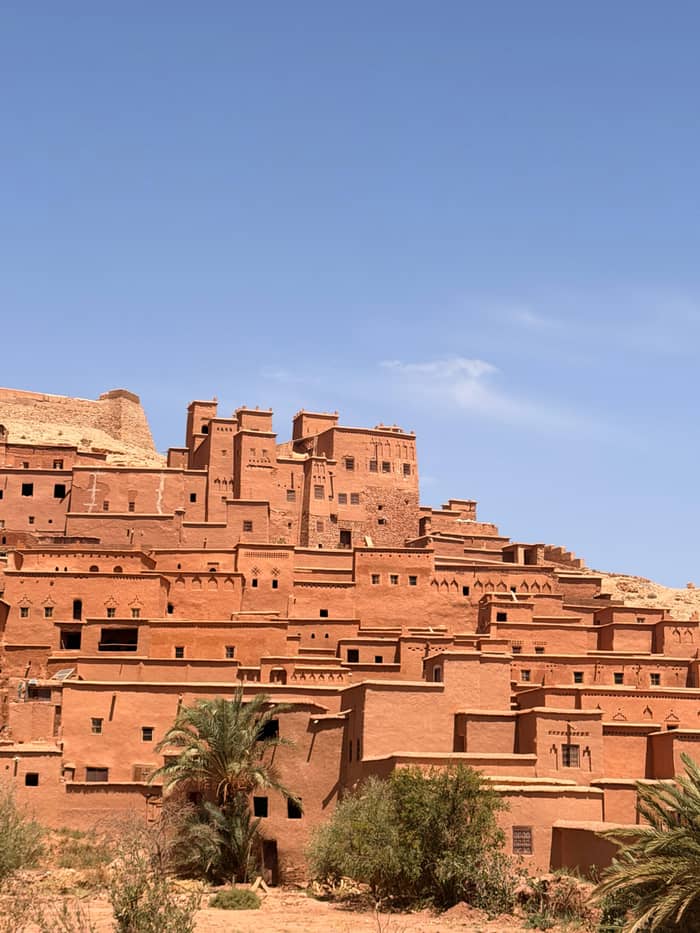
Cooling
September to November
See the day trip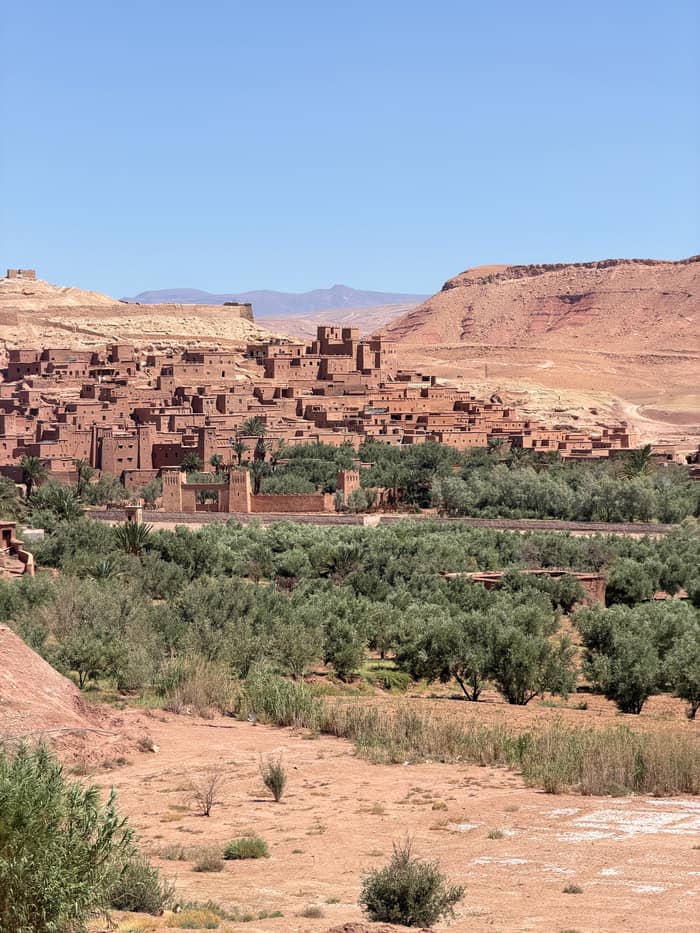
Plan harder
The off seasons
See the day tripSeptember still feels like summer, with a daily high of 32.8 °C and a low of 18 °C at the Ouarzazate station.2 October drops to 26.9 °C by day and 12.7 °C by night, and November to 21.4 °C and 7.4 °C.2,2 That slide from hot to cool makes October and November comfortable months for a first visit, and the tourism office's season advice backs the instinct.1
Autumn is slightly wetter than spring, though the amounts remain small. The record shows 14 mm in September and 18 mm in October before November falls back to 5 mm.2,2,2 A storm over the Atlas can still disturb a pass crossing, and the operator of a listing says that in rare cases of severe weather or an official snow closure the trip may be rescheduled or fully refunded. The wording is a reminder that a mountain road is a mountain road in any season.
Day length starts shrinking as the clock turns. Daylight shrinks to 11.5 hours in October and 10.6 hours in November.2,2 A tour listed at 11 hours runs close to the whole of the daylight by late autumn, while another listed at 12 hours may finish after dusk. Ask the operator about the exact pickup time when you book for November; an early start keeps the return leg in the light.
Compare the dates
Choose your group size and weigh the day trips side by side.
Side-by-side: 4 options
Choose your group size and weigh the day trips side by side.
≈
View≈
View≈
View≈
ViewFigures are GetYourGuide from-prices, translated at the ECB reference rate. The booking step shows what you pay exactly.
Through the year
December to February
Highs of 16.9 to 19.3 °C and January lows of 1.7 °C, with the pass open to snow.2,2,2
March and April
Highs rise from 22.6 °C to 27 °C, and rain stays at 13 mm and 11 mm.2,2
May
A 30.4 °C high, 2 mm of rain and 13.7 hours of daylight.2
June to August
Highs of 35.1 to 38.7 °C, with warm nights above 19 °C.2,2,2
September and October
A 32.8 °C high falls to 26.9 °C while rain reaches 14 mm and 18 mm.2,2
November
A 21.4 °C high, 7.4 °C nights and 10.6 hours of daylight.2
Winter days at the Ouarzazate station are mild and the nights are cold. December reaches 17.5 °C by day and 3.6 °C by night, January 16.9 °C and 1.7 °C, and February 19.3 °C and 5.3 °C.2,2,2 The tourism office's words, mild days and cool evenings, fit those figures, though the January low is close to freezing.1 In a valley with little shelter a winter dawn feels sharper than the number suggests, so a warm layer belongs in the bag for the early start.
The pass is a different matter. The station sits in the valley by Ouarzazate and does not describe the high road, so the record cannot say how cold the crossing is; what a listing does say is that an official road closure due to snow can lead the operator to reschedule the trip or refund it in full. That clause is the practical rule for winter: choose a free-cancellation booking, keep the day after flexible and accept that a snow day is a decision made by the road authority rather than the tour company.
February tops the rain column at 28 mm, with December next at 23 mm.2,2 Wet days stay at 2 in both months, so rain is brief even when it comes.2,2 The short days matter as much as the rain: December offers only 10.2 hours of daylight, which is less than the length of an 11 hour tour, so winter is the season to confirm the pickup time and to expect part of the return drive in the dark.2
Video
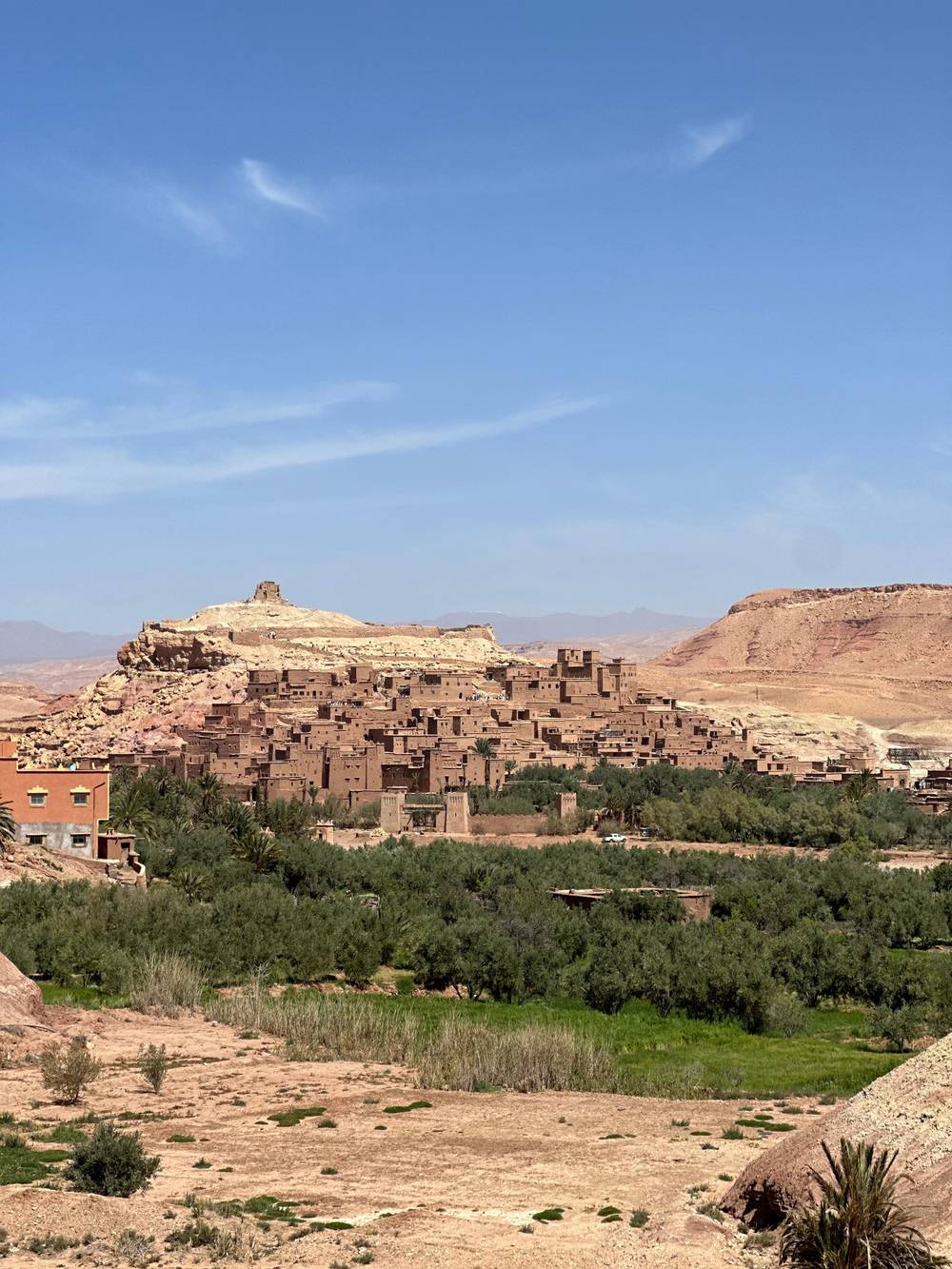
JuliaSomething | Travel Guides & Road Trips on YouTube · The video only starts loading on your tap.
To the south, the country opens up to the vastness of the Sahara. Spring and fall are the best times to venture here.
People searching for Ait Ben Haddou weather usually want a plain answer: will it rain on my day. The Ouarzazate record answers in millimetres. The annual pattern runs from 2 mm in May and 4 mm in July to 23 mm in December and 28 mm in February, and no month in the record has more than 2 wet days.2,2,2,2 That is a dry place by any standard.
A dry climate has a side effect for the ksar itself. Earth buildings do not like water, and UNESCO says the earthen buildings are very vulnerable where maintenance and repair lapse after inhabitants leave, and sparse rain is good news for such walls, while the care of the residents who stay matters just as much.5,6 When rain does fall, the lanes can turn slippery and muddy, and sturdy shoes with a grip are worth more than an umbrella.
Cloud and wind are not in this record, and neither is the weather on the pass itself, and the figures are best read as a guide to the valley rather than a forecast. For the day you book, check a short-range forecast for both Marrakech and Ouarzazate on the evening before. The operator of the main listing contacts you that evening to confirm the pickup, and the same evening is the right time to decide whether to bring a jacket.
For Ouarzazate and Ait Benhaddou in any month, the base kit is the same: comfortable shoes, sunglasses and a sun hat, which is the short packing list a listing gives for its day from Marrakech. Add a water bottle, a charged phone and some cash for lunch and any entrance on the day, and a listing states that lunch is not included and that the studio entrance is paid in cash at the door. The rest of the packing depends on the season you picked.
For the hot months, think of the ksar as an open-air walk with little cover: a light long-sleeved shirt protects the arms better than bare skin, and a scarf shades the neck on the steps. For the cool months, think in layers, because a 1.7 °C January dawn and a 16.9 °C January afternoon happen on the same day.2 Dress modestly in every season, since Ait-Ben-Haddou is a place where people live and worship, with a mosque among its community areas.7
Finally, remember the 24 hour rule of the listing. A free-cancellation booking is a cheap piece of weather insurance for a day trip, and it gives you until the day before to look at the sky. If the forecast shows heavy snow on the Atlas or a heat spike above anything in the record, take the cancellation rather than the risk, and rebook for a spring or autumn day when the tourism office says the region is at its best.1
FAQ
Visit Morocco, the national tourism body, lists March to May and September to November and calls summer very hot.1
The Ouarzazate record gives July a daily high of 38.7 °C and a night low of 22.7 °C.2
Daily highs reach 16.9 °C in January, but a snow closure of the road can reschedule or refund the trip.2
The record shows 2 mm of rain in May and no wet days at all.2
The sold listing pays a full refund for a cancellation made a day or more before departure.
Sources
Continue reading
Planning the ksar and the studios in a day? Ask a real person here.